


International Legal Strategy and the Significance of Diplomatic Protest in Protecting Cambodia’s Territorial Integrity
- The Youth Policy
- Jun 1
- 4 min read

In the context of global politics and modern international law, protecting national sovereignty does not rely solely on military might; it depends heavily on the correct and timely application of legal instruments. For the Kingdom of Cambodia, maintaining a stance of protest and actively utilizing diplomatic mechanisms against any violation or aggression along its borders is the wisest strategy adopted by the Royal Government. The critical foundation requiring Cambodia to resolutely maintain its diplomatic responses is to prevent the dangers of an international legal principle known as "Acquiescence." This principle dictates that if a state is aware of actions violating its rights or territory by another state but remains silent or fails to express a protest within a reasonable period, an international tribunal may interpret that silence as voluntary "consent" or the "abandonment" of its sovereign rights to the other party. Therefore, each Note of Protest issued by Cambodia is an essential task to "stop the clock" of silence and clearly demonstrate to the international community that Cambodia never recognizes any illegal occupation.

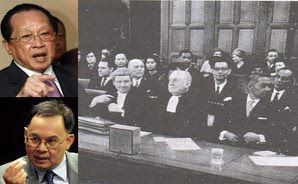
A historical lesson serving as undeniable evidence is the Temple of Preah Vihear dispute, adjudicated by the International Court of Justice (ICJ) in 1962. In that historic judgment, the Court placed a high value on the principles of "Acquiescence" and "Estoppel" (the principle that a party cannot backtrack on or deny what it has previously done or said to evade responsibility), ruling in favor of Cambodia. This was because the Thai party was aware of the existence of the Dangrek map, which indicated the Temple of Preah Vihear was located within Cambodian territory, yet failed to file any official protest for decades. The Court deemed Thailand's silence at that time as consent to the boundary line drawn by the French. Guided by this precedent, the Royal Government of Cambodia has clearly learned that maintaining a "protest" is the strongest shield. Even if certain violations cannot be resolved immediately in practice, constant protest ensures those actual occupations remain permanently classified as "disputed and illegal acts," preventing them from evolving into lawful sovereignty. This protects the nation's future, as all protest documents will serve as invaluable evidence should the conflict ever proceed to international adjudication.
Furthermore, active diplomacy aims to neutralize the strategy of "creating facts on the ground," which the opposing party often attempts to execute through building structures, deploying troops, or setting up illegal administrative networks on Cambodia's sovereign domain. In international law, actual possession can only become a valid argument for a property claim if the original owner fails to protest. However, as Cambodia continues its diplomatic struggle, those activities instantly lose their legal weight because they do not constitute peaceful and undisputed administration. Adhering to the principle of status quo (maintaining the legal situation as it stands) and defending the Franco-Siamese Boundary Treaties of 1904 and 1907 demonstrates the maturity and firmness of the Royal Government in peacefully protecting its territorial integrity. In summary, Cambodia’s rejection of silence is a golden strategy reflecting the highest spirit of responsibility toward the nation and its people, ensuring that the ancestral heritage is not lost to the trap of international law known as "Acquiescence," while the prestige of the Kingdom of Cambodia is confidently maintained through the power of international justice.
Analyzing deeper into the dimension of international law, we must examine the impact of "systematic protest," which serves as Cambodia's primary strategy to invalidate the rights claimed by the other side. In international law, actions executed by a state over a disputed territory can only evolve into lawful sovereignty if they are conducted in a "peaceable and uninterrupted" manner. Consequently, every time the Royal Government of Cambodia issues a statement of protest or sends a diplomatic note to the international community, it effectively strips away this condition of "peaceable" administration. This renders the other party's possession forced and permanently contested, meaning it can never serve as a foundational basis to claim ownership before an international court, regardless of how much time passes. Moreover, maintaining a constant stance of protest protects Cambodia from the principle of Prescription (acquisitive prescription) in international law. This principle allows a state to acquire rights over a territory if the original owner fails to show the will to protect or reclaim it over a long period. Through an uninterrupted diplomatic mechanism, Cambodia clearly demonstrates the "will of the owner" (animus possidendi), which stands as the most powerful evidence that we have never abandoned or transferred our sovereign rights to another state. This guarantees that despite complex physical realities on the ground, the legal status of the territory remains under Cambodian sovereignty in accordance with the spirit of historic treaties.
Concurrently, pursuing a legal battle in international law demands the systematic compilation of documentary evidence. Every border violation officially recorded and protested by Cambodia will become an invaluable "historical record." It also sends a clear message to global superpowers and international organizations that while Cambodia is a small nation, it is a country that strictly respects the rule of law. Adhering closely to international law gives Cambodia leverage on the international stage and helps secure global political support, placing pressure on the aggressor party to return to peaceful negotiations and respect mutual territorial integrity based on international goodwill. In technical terms, protecting sovereignty through a strategy of non-silence is also a proactive preparation for the jurisdiction of the ICJ in the future. The Court consistently looks for evidence of "timely protest." If Cambodia fails to protest a specific action today, we will forfeit the right to bring up that point for debate in the future. Therefore, the Royal Government's continued monitoring and reaction to every irregularity along the border represents the most meticulous fulfillment of a legal obligation, ensuring that all of Cambodia's legal options remain fully valid and preventing the other party from utilizing legal technicalities to block our avenue of protest. This is an enduring struggle requiring patience, intellect, and solid national unity for the sacred cause of our nation's territorial integrity.
Please note: This analytical article was written by a researcher for the sole purpose of sharing personal insights and academic study. If there are any errors or omissions, please accept our apologies and constructive corrections with respect. Written by: PAROS TIT


Comments